
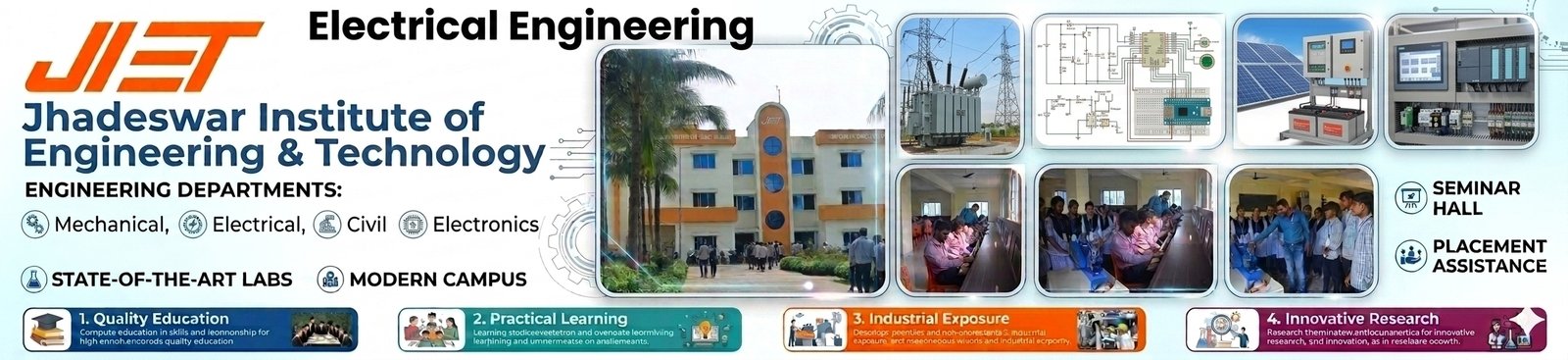
Diploma in Electrical Engineering
Unlocking the Future: Key Learning Areas in Electrical Engineering
Electrical engineering is the invisible force powering modern civilization. From the microscopic circuits inside a smartphone to the massive power grids spanning entire continents, this dynamic field drives global innovation. For students and aspiring engineers, mastering electrical engineering requires diving into several critical, interconnected core learning areas.
1. Power Systems and Renewable Energy
This foundational pillar focuses on how electricity is generated, transmitted, and distributed. As the world shifts away from fossil fuels, this learning area has evolved dramatically. Students dive deep into smart grids, high-voltage engineering, and the integration of renewable energy sources like solar, wind, and hydro power into existing electrical systems.
2. Control Systems and Automation.
Control systems are the “brains” behind automated machinery. This area teaches engineers how to regulate the behavior of dynamic systems using feedback loops. It is vital for industries relying on robotics, automated manufacturing lines, aviation autopilots, and self-driving vehicles. Learning this involves heavy exposure to mathematical modeling and industrial software.
3. Electronics and Embedded Systems.
This discipline explores the design of semiconductor devices, microprocessors, and integrated circuits (microchips). Embedded systems combine hardware and software to perform dedicated functions within larger systems. Mastering this area allows engineers to design everything from medical pacemakers and automotive control units to consumer electronics.
4. Signal Processing and Communications
In an interconnected world, transmitting data reliably is paramount. Signal processing involves analyzing, modifying, and synthesizing signals such as audio, video, and scientific data. This learning area covers the mechanics behind 5G/6G wireless networks, satellite communications, radar systems, and digital image processing.
5. Electric Vehicles (EVs) and E-Mobility
An explosive new frontier in electrical engineering is the electrification of transportation. This specialized area focuses on battery management systems (BMS), electric motor drives, power electronics, and charging infrastructure, preparing engineers to lead the green transport revolution.
Conclusion
Electrical engineering offers a vast landscape of specializations. By balancing classroom theory with hands-on experimentation in state-of-the-art laboratories, students gain the tools necessary to tackle global energy challenges, automate complex industries, and build the smart technologies of tomorrow.
Electrical engineering offers a vast landscape of specializations. By balancing classroom theory with hands-on experimentation in state-of-the-art laboratories, students gain the tools necessary to tackle global energy challenges, automate complex industries, and build the smart technologies of tomorrow.
Career Areas:
Empowering Tomorrows: Diverse Career Areas in Electrical Engineering
Electrical engineering is one of the most versatile professional paths in the global technology landscape. Because electricity and electronic systems power virtually every modern industry, graduates possess highly adaptable skills that open doors to diverse, lucrative sectors.
1. Renewable Energy and Smart Grid Utilities.
As nations race to meet net-zero carbon goals, the energy sector is undergoing a massive transformation. Electrical engineers in this field design, optimize, and maintain infrastructure for solar farms, wind turbines, and hydroelectric plants. They also specialize in building smart grids—advanced digital networks that intelligently manage power distribution, integrate energy storage systems, and prevent large-scale blackouts.
2. Automotive and Electric Mobility (E-Mobility).
The transportation sector is rapidly electrifying, making electrical engineers highly sought after by automotive giants and aerospace companies. Professionals in this space develop battery management systems (BMS), high-efficiency electric motors, and power electronics that regulate energy flow in electric vehicles (EVs). They are also instrumental in designing autonomous driving sensors, radar systems, and vehicle-to-everything (V2X) communication networks.
3. Industrial Automation and Robotics.
Manufacturing plants worldwide rely heavily on automation to increase speed and reduce human error. Engineers in this career track design and program Programmable Logic Controllers (PLCs), robotic arms, and automated assembly lines. By merging control systems theory with industrial hardware, they optimize production for everything from food and beverage packaging to heavy machinery fabrication.
4. Telecommunications and Network Engineering.
In our hyper-connected world, maintaining seamless communication infrastructure is vital. Electrical engineers design the hardware and protocols behind 5G and emerging 6G wireless networks, fiber-optic systems, and satellite communications. They ensure that data packets travel securely and rapidly across global networks, forming the backbone of the internet and cloud computing.
5. Semiconductor and Consumer Electronics.
From smartphones and medical imaging devices to smart home appliances, the demand for smaller, faster technology never stops. Engineers in the electronics sector work on the research, development, and testing of microprocessors, integrated circuits (microchips), and printed circuit boards (PCBs), turning complex physics into everyday consumer tools.
Conclusion.
A career in electrical engineering offers the rare chance to solve tangible global challenges. Whether pioneering clean energy solutions or building the next generation of smart devices, electrical engineers remain the essential architects of our technological future.