
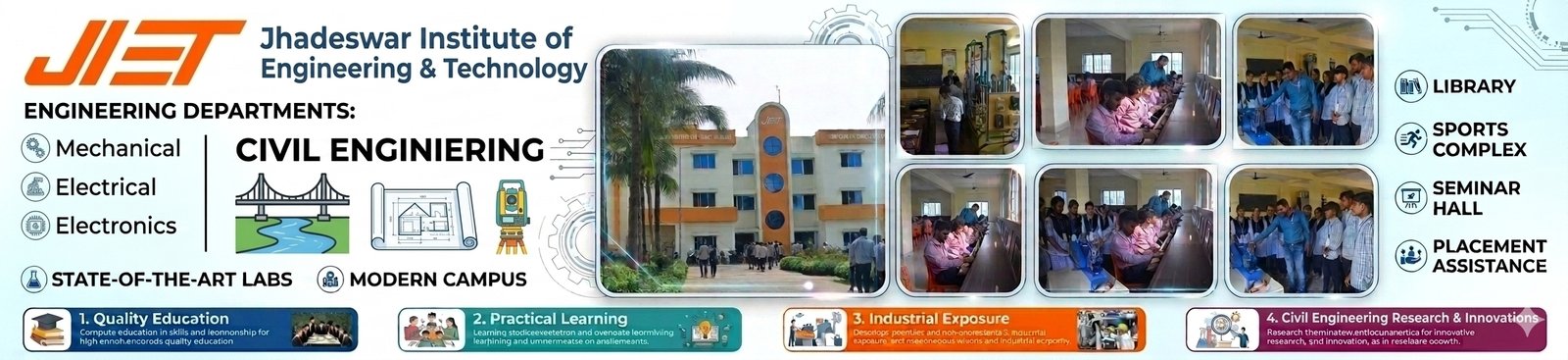
Diploma in Civil Engineering
Civil engineering is the foundational discipline responsible for the physical infrastructure of modern society. From soaring skyscrapers and sprawling highway networks to clean water systems and massive transit hubs, civil engineers turn architectural concepts into safe, enduring realities. For students entering this vital field, the educational journey covers several essential, interconnected core learning areas.
This critical area focuses on the skeleton of civilization. Students learn the physics and mechanics needed to design structures that can safely withstand their own weight and external forces like wind, traffic, and earthquakes. Learning involves analyzing materials like reinforced concrete, structural steel, and timber to ensure buildings, bridges, and dams remain safe and durable throughout their lifespans.
Every structure rests on the earth, making soil mechanics and rock mechanics indispensable. Geotechnical engineering teaches students to evaluate the behavior of earth materials. They learn how to analyze soil stability, design secure building foundations, assess slope safety, and engineer earth-retaining structures like retaining walls and tunnels.
As urban populations grow, moving people and goods efficiently becomes paramount. This discipline covers the planning, design, and operations of transportation networks. Students explore the mechanics of highway design, pavement engineering, traffic flow optimization, and the integration of modern mass transit systems like railways and airports.
Civil engineers play a leading role in public health and ecological preservation. This learning area focuses on managing water supplies, designing wastewater treatment plants, and controlling urban stormwater drainage. Students learn fluid mechanics and hydraulic engineering to design systems that protect communities from flooding while ensuring access to clean drinking water.
Turning a blueprint into a finished project requires strict logistical oversight. This area bridges engineering theory with business practices. Students learn about project scheduling, cost estimation, construction contracts, and site safety protocols, preparing them to manage multi-million dollar infrastructure projects from start to finish.
Civil engineering offers a vast landscape of specializations dedicated to societal advancement. By combining rigorous scientific theory with practical training in materials testing and surveying laboratories, students gain the tools required to build resilient communities, upgrade crumbling infrastructure, and shape the cities of tomorrow.
Career Areas: Construction | Infrastructure | Surveying | Roads & Buildings | Project Supervision | Engineering Services
A career in civil engineering offers the rare opportunity to leave a lasting physical legacy on the planet. Whether engineering resilient structures, managing massive construction sites, or securing clean water supplies, civil engineers remain the indispensable builders of tomorrow’s civilization.